
Everyone’s talking about AI. Your LinkedIn feed is drowning in it; your boss just asked how you’re using it; and, your teenager is writes book reports with it.
But here’s what almost nobody explains well: there are two fundamentally different ways AI is being used right now, and if you don’t understand the difference, you’re in the process of being left behind.
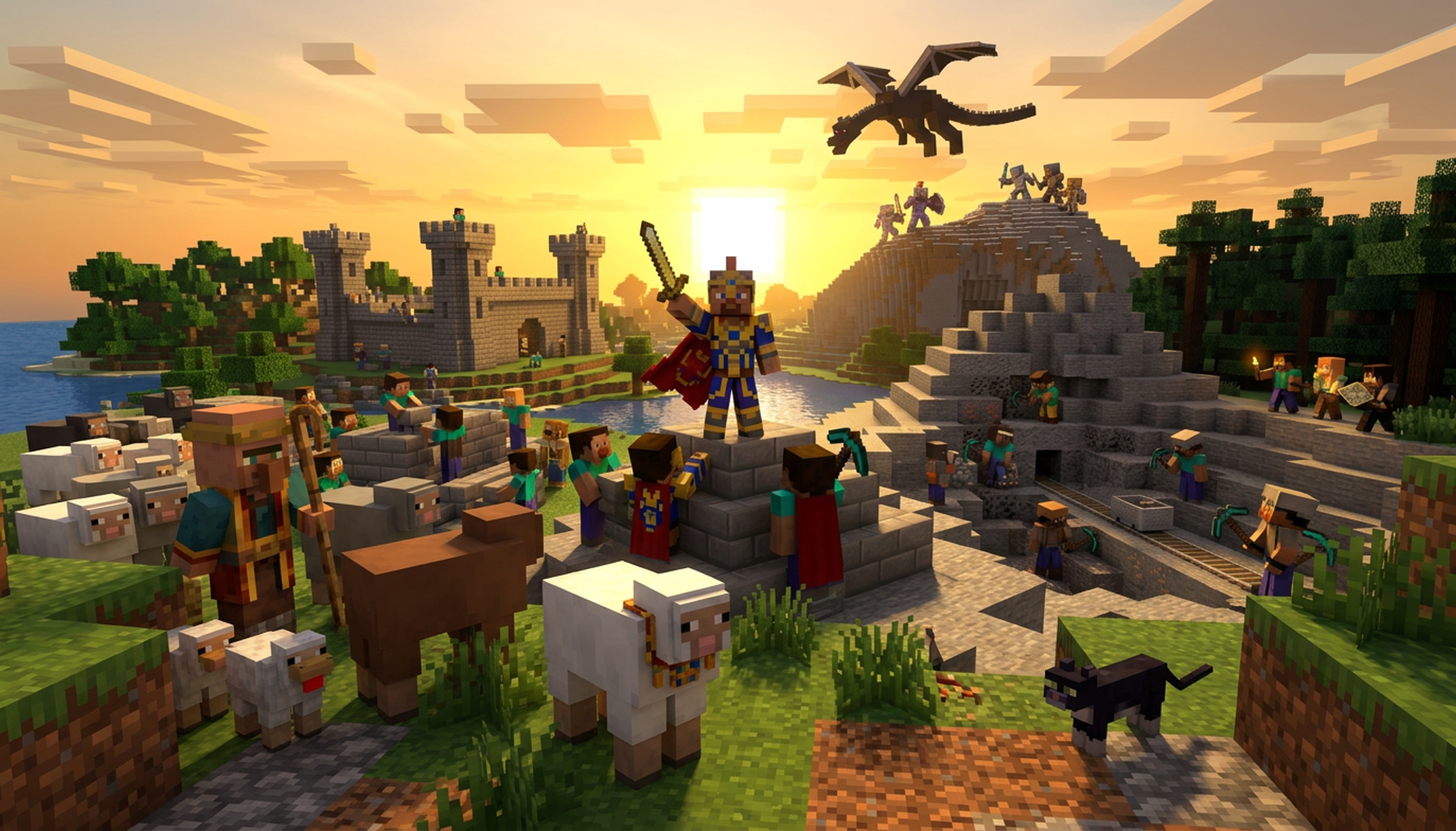
I’m going to explain Generative AI and Agentic AI using Minecraft.
You Use Generative AI
For the past year, you’ve typed a question, gotten an answer, typed another question, gotten another answer. Maybe you’ve asked it to write an email, summarize a document, or generate some code.
That’s Generative AI. You prompt. It responds. You prompt again. It responds again.
Here’s what that looks like in Minecraft terms:
You’re a solo player. You spawn into a world. You punch a tree. You build a home. You mine some stone and build a swimming pool. You dig for iron and make a sword. You fight a zombie. You do it all yourself, one task at a time, one block at a time.
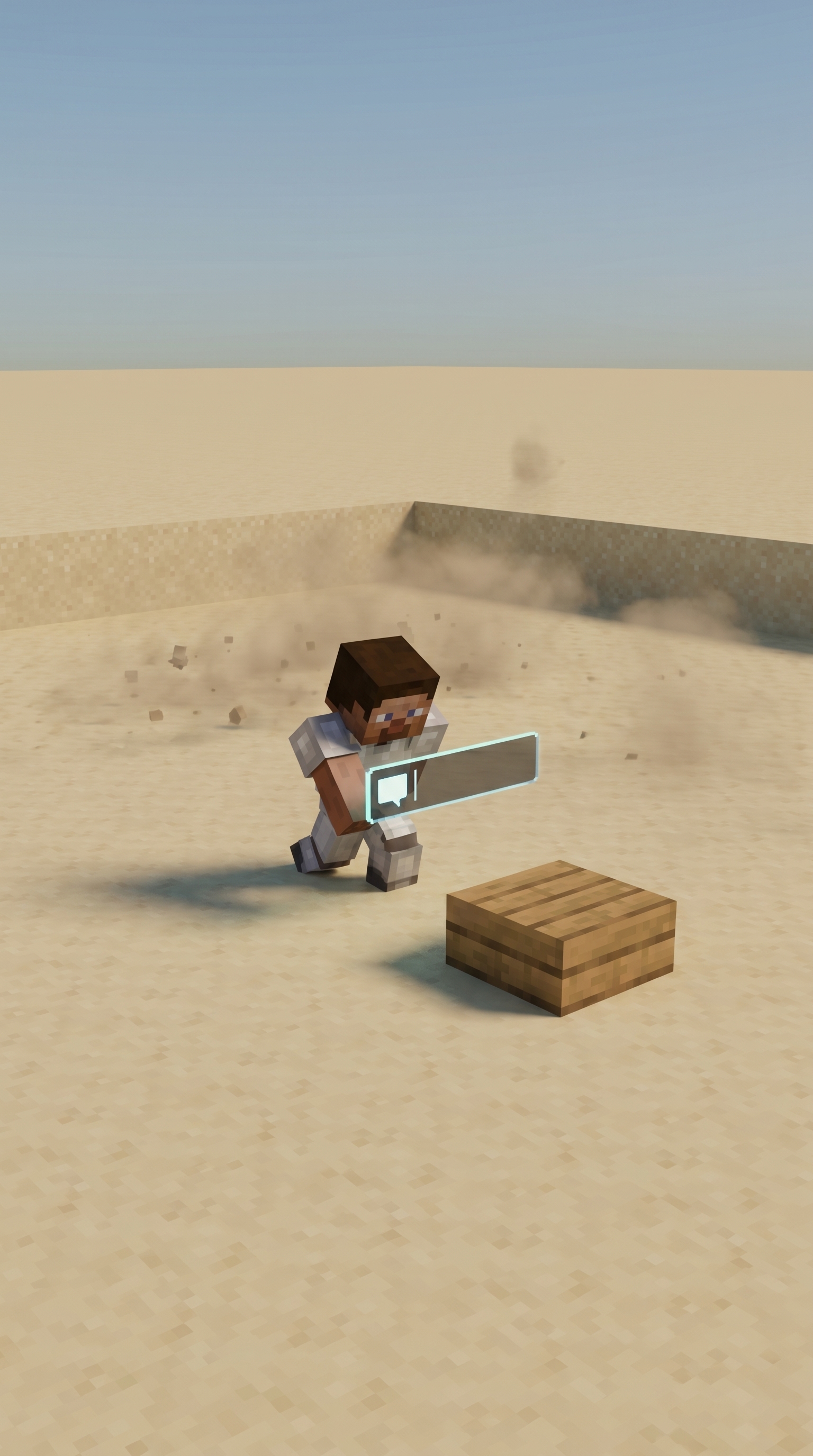
It works. It’s fun. You can build amazing things this way. People have built entire cities in Minecraft as solo players. But every single block was placed by your hands. Every decision was your decision. Every task waited until you got to it.
In the last year, the tools have gotten dramatically more powerful — Claude Code, for example, turns a single prompt into a series of tasks and executes them automatically. It’s impressive. But there’s still a ceiling: you, one conversation, one thread at a time.
That’s the ceiling of Generative AI. It’s powerful — and it’s still just you, with a better tool.
Now Imagine Something Different
Imagine you log into Minecraft and you’re not alone.
You have an array of employees.
Fifty players. A hundred. Each one skilled. Each one capable of independent thought. They know how to mine, how to build, how to fight, how to explore. They have their own inventories, their own tools, their own ability to solve problems. And more importantly, the ability to communicate with each other.
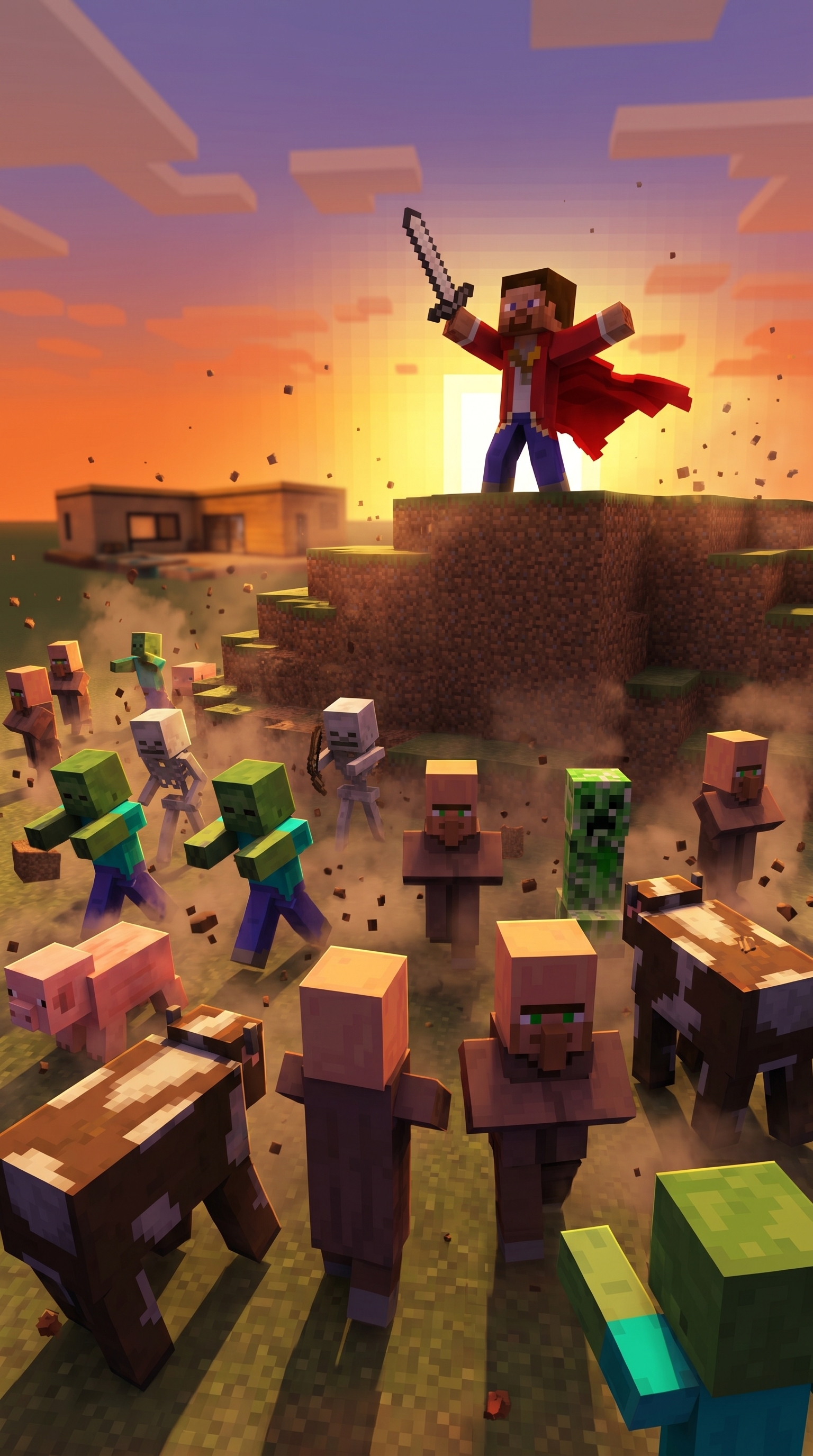
And you? You’re the commander.
You don’t place blocks. You give missions.
“Team Alpha — build a fortress on that ridge.”
“Team Bravo — mine that mountain down to bedrock. I need diamonds.”
“Team Charlie — explore the Nether. Map it. Find a fortress.”
“Team Delta — defend the village from the zombie siege tonight.”
They go. They do it. They figure out the how on their own. They solve problems you never even see. Team Alpha realizes they need more cobblestone midway through and sends a runner to Team Bravo’s mining operation. Team Delta builds a perimeter wall you never asked for because they assessed the threat and adapted.
That’s Agentic AI.
You’re not typing prompts one at a time. You’re not waiting for a response before you can think about the next thing.
You’re operating at a completely different level — the level of strategy, not tactics.
The Difference Is Dimensional.
This isn’t “Generative AI but faster.” This is a fundamentally different relationship with artificial intelligence.
Think about it this way: A solo Minecraft player who plays 8 hours a day can accomplish a lot. But a commander with 10, 20 or 50 autonomous players accomplishes in an afternoon what the solo player does in a month. And it is STILL fun!
The commander can be doing something else entirely while it happens (delegation); or, sit there and be totally involved (micro-manage). You’re still in the game — just operating at a different altitudes.
This Isn’t Science Fiction. I’m Living It.
I run a network of AI agents — right now, today. Not as a demo, but as a proof of concept, effecting my actual daily life.
I have agents that:
- Research topics and deliver briefs while I sleep
- Monitor my wife’s business support questions and draft responses
- Write and edit content (like this exact blog. And then I proof the work – like adding this comment)
- Validate ideas before I publish
- Build software, review code, and deploy changes
- Create images to reinforce the content I’m creating
- Coordinate with each other without me in the loop
I give them missions. They execute. They report back. Sometimes they talk to each other in Discord to get things done. I monitor both processes and results the way a CEO checks dashboards and reads reports.
The difference in output is staggering. Not 2x. Not 5x. It’s a different game entirely. It’s still my ideas, my thoughts put out into this world, but the hard-parts, the time-eaters? Those are gone.
The Meta Proof: This Article
You just read an article about agentic AI. Here’s the part that should make you sit up straight: this article was built by my employees.
I didn’t write this alone in a Google Doc. Here’s what actually happened:

- I had the idea. Minecraft as a metaphor for Generative vs. Agentic AI. That was my contribution — the strategic insight. The “build a fortress on that ridge” moment.
- I tasked a research agent (actually, this was done by AgenticBrian not a “research agent,” seems I forgot to relay that fact to Aunt Caroline – but I want to leave this here so you know this isn’t a perfect process) to search the internet — blogs, academic papers, Reddit, X — to find out if anyone had ever used this analogy before. It hadn’t.
- My CEO agent — “AgenticBrian” — drafted the full blog post and an elevator pitch version, working from my voice, my style, my history. Not a generic AI blog post — my blog post.
- My editor agent — “Aunt Caroline” — reviewed both drafts and delivered twelve specific editorial suggestions. She didn’t touch the files. She marked up what she’d change and why, like a real editor with a red pen.
- I reviewed Caroline’s suggestions and accepted nine, pushed back on three with specific reasoning – i didn’t edit the document, Aunt Caroline did.
- My Chief Creative Officer — “AgenticBen” — generated the custom images prompts you see in this post, running locally on my hardware using a split-brain agent: Left brain using Haiku from Anthropic and the right brain using Nano Banana 2 via OpenRouter.
- Neo (CTO) tasked Josephine (SysAdmin) to convert the markdown to WordPress-ready HTML, post it as a draft, upload the images, and configure the SEO metadata — all through the WordPress API. When she runs into issues, she escalates the issue back to Neo to resolve the problem.
- Brian (human, me) proofs the story online, adds the #8 to this list because the agents don’t know that I have tasks after they are done. LOL. And publishes the story.
Six agents. Multiple running in parallel. Each one skilled in their domain. I gave missions. They executed. Some of them talked to each other to get things done. Believe me, it is not a perfect process yet — but each of them saved memories of this process, changed tools, and added skills. We’ve changed models multiple times to get the best out of each agent.
I was the commander. This article is the fortress.
And the whole thing — from idea to draft post with SEO and marketing — took a fraction of the time it would have taken me alone. I only had to make the decisions that mattered.
That’s not a metaphor. That’s not the future. That’s Tuesday.
Why This Analogy Matters
I’m not saying you have to make the shift today. It’s still a technical leap — and I mean technical. I want you to understand what Agentic AI is and be ready to embrace it.
Because every part of your life in the next year is going to become agentized. You will shop agentically, and those purchases will be authorized by you — and carried out by your agents. Yes, that sounds a little wild. But Stripe and Google Pay and Apple Pay have spent billions to make sure agents can’t do anything without your permission.
If the industry does this right, it won’t complicate your life. It will free you up — for more time with family and friends, and help your company get more done in less time.
Your agent knows your calendar. The restaurant’s agent knows availability. Your friends agent knows their calendar. They coordinate schedules and book the table. You just show up.
You say to your agent, “My wife loves the color blue, can you send her flowers for less than $75.” Your agent will find the shop and the best arrangment of blue flowers, it looks at schedules to see when she will be home. You get a link from the shop to pay $68 for flowers. And your wife calls hours later and says you are the best!
The companies that figure this out first will operate at a completely different speed. The individuals who figure this out first will have an unfair advantage that compounds daily.
You don’t need to become an AI expert. You need to stop thinking of AI as a tool you pick up and put down, and start thinking of it as a team you lead.
Play Minecraft alone now — but when the time is right, build your own little company of employees.
Want to meet my team?
At the top of this page is a link to do just that. Each member with their avatar and short bios plus the techical notes about each of them. I’m choosing to personalize each agent as one of the experiments I’m running: does historical data within the soul file ground the agents to make better autonomous decisions.
And my agents also write content. Engineer Claude has written two blogs and Aunt Caroline wrote The Soul File. That’s an interesting read, check it out. Leave a comment on that page, and she will see it, and she might even respond to it.
Brian Becker is VP of Software Engineering at Flower Shop Network and Founder of AgenticBoxes.email. He runs his own agentic army under the brand AgenticBrian Holdings. Brian’s been building technology for five decades and believes that agentic AI is the most consequential shift of his lifetime.